NeurIPSAdvances in Neural Information Processing Systems, 2026
Flow-Corrected Shape Optimization: Taming Manifold Drift in High-Dimensional 3D Models
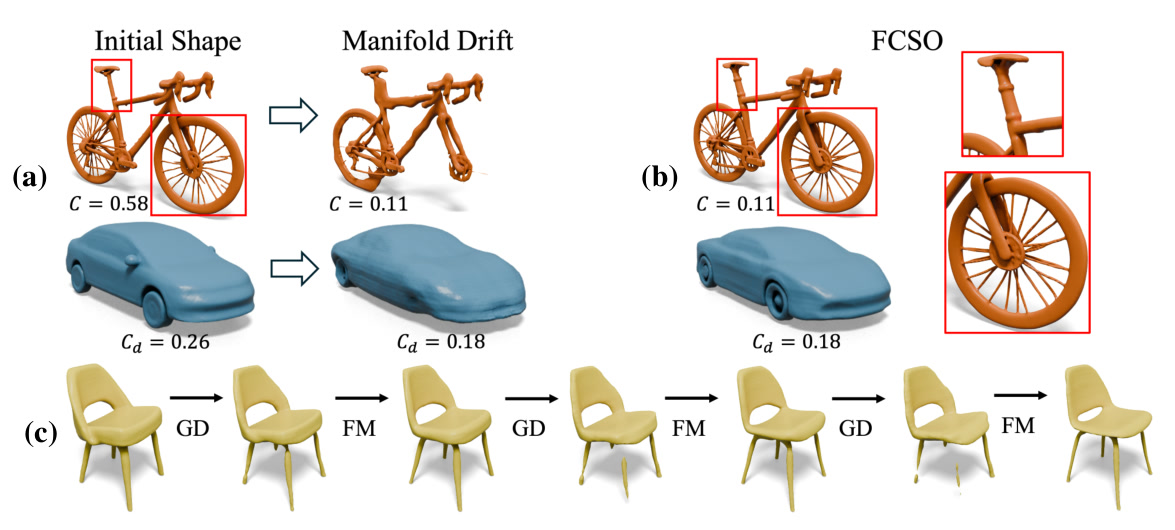
TL;DR Gradient-based optimization in the latent space of large 3D generative models drifts off the manifold of valid shapes. FCSO alternates free gradient steps on the objective with a flow-matching correction that brings the latent back onto the manifold: optimize freely, correct strictly.
Video
A 2.5-minute explainer of manifold drift and FCSO (with voice-over and captions).
Abstract
Optimizing 3D shapes within the latent spaces of deep generative models is fundamental to computer assisted engineering, yet remains prone to a critical failure mode we term manifold drift: the tendency of gradient-based optimization to move latent vectors away from the manifold of valid shapes. This problem is exacerbated in state-of-the-art 3D shape generative models that operate in increasingly high-dimensional latent spaces where valid shapes occupy a vanishingly small fraction of the full space. Existing mitigation strategies, including latent regularization and flow-matching approaches, either sacrifice expressiveness, demand a difficult trade-off between objective guidance and generative fidelity that remains prone to manifold drift, or are computationally infeasible to scale to modern, large-capacity 3D shape models. We introduce a novel optimizer-corrector framework that alternates between gradient steps for objective minimization and guided flow matching to drive the latent state back to the valid shape manifold. By decoupling objective minimization from flow-based correction, optimizing freely and correcting strictly, this alternating design avoids inherent trade-offs, preserving geometric validity without sacrificing expressiveness while remaining computationally feasible on modern 3D shape models. We demonstrate its effectiveness across generative priors of varying complexity, from simple vector latent spaces to large-scale architectures across a variety of downstream optimization tasks, including aerodynamic drag reduction and object compliance optimization.
Gradient descent vs. FCSO
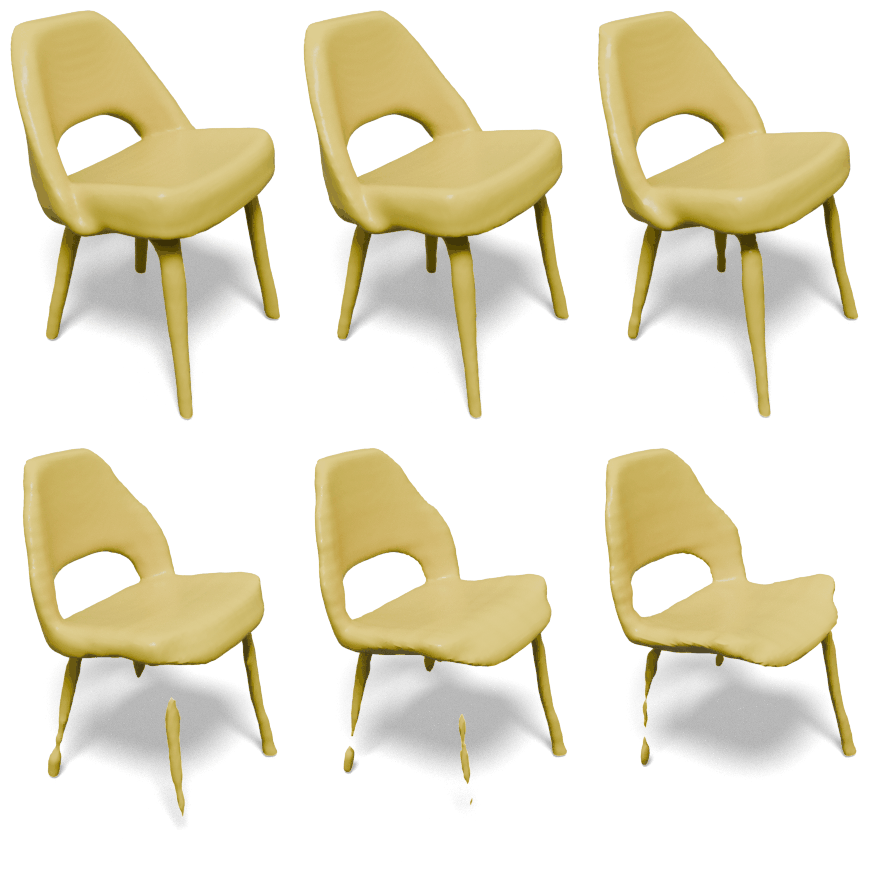
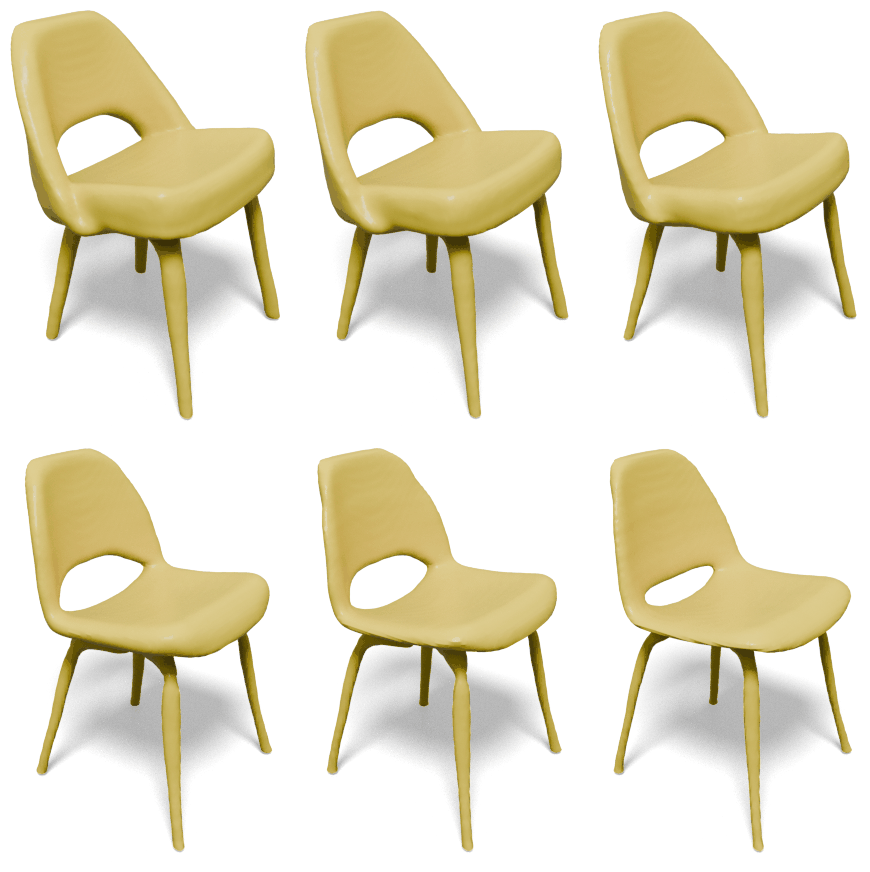
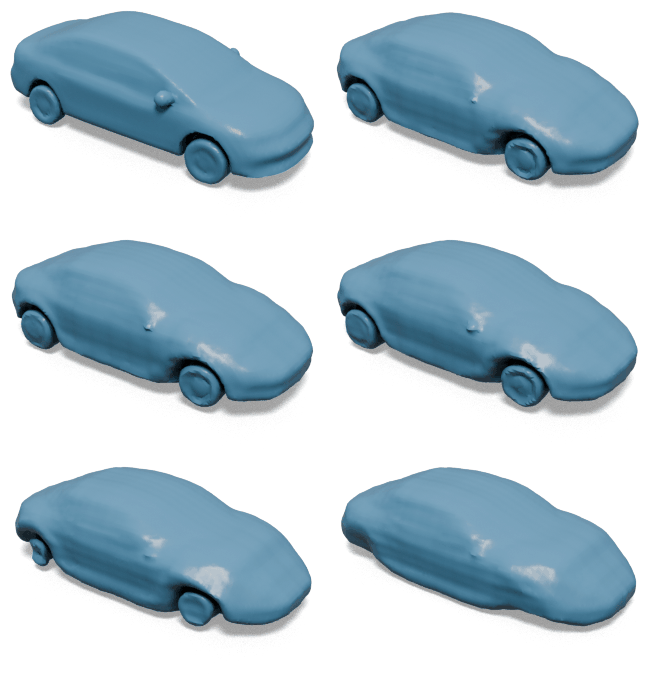
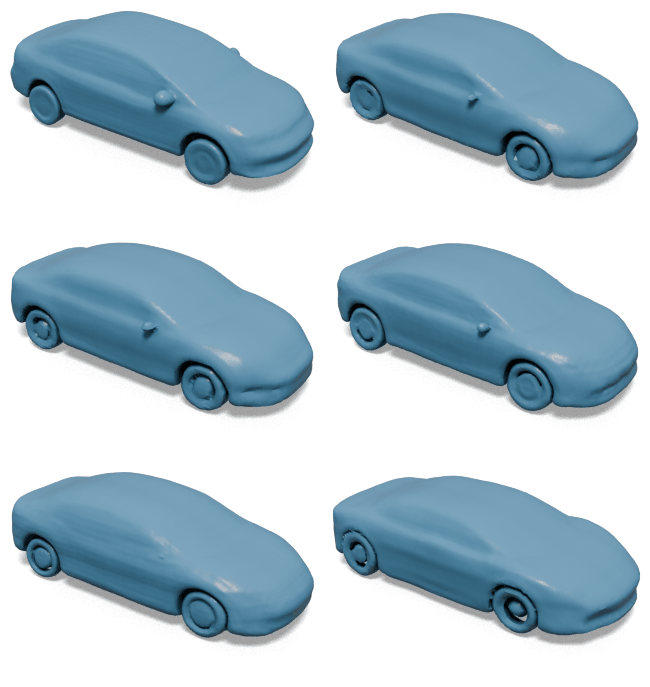
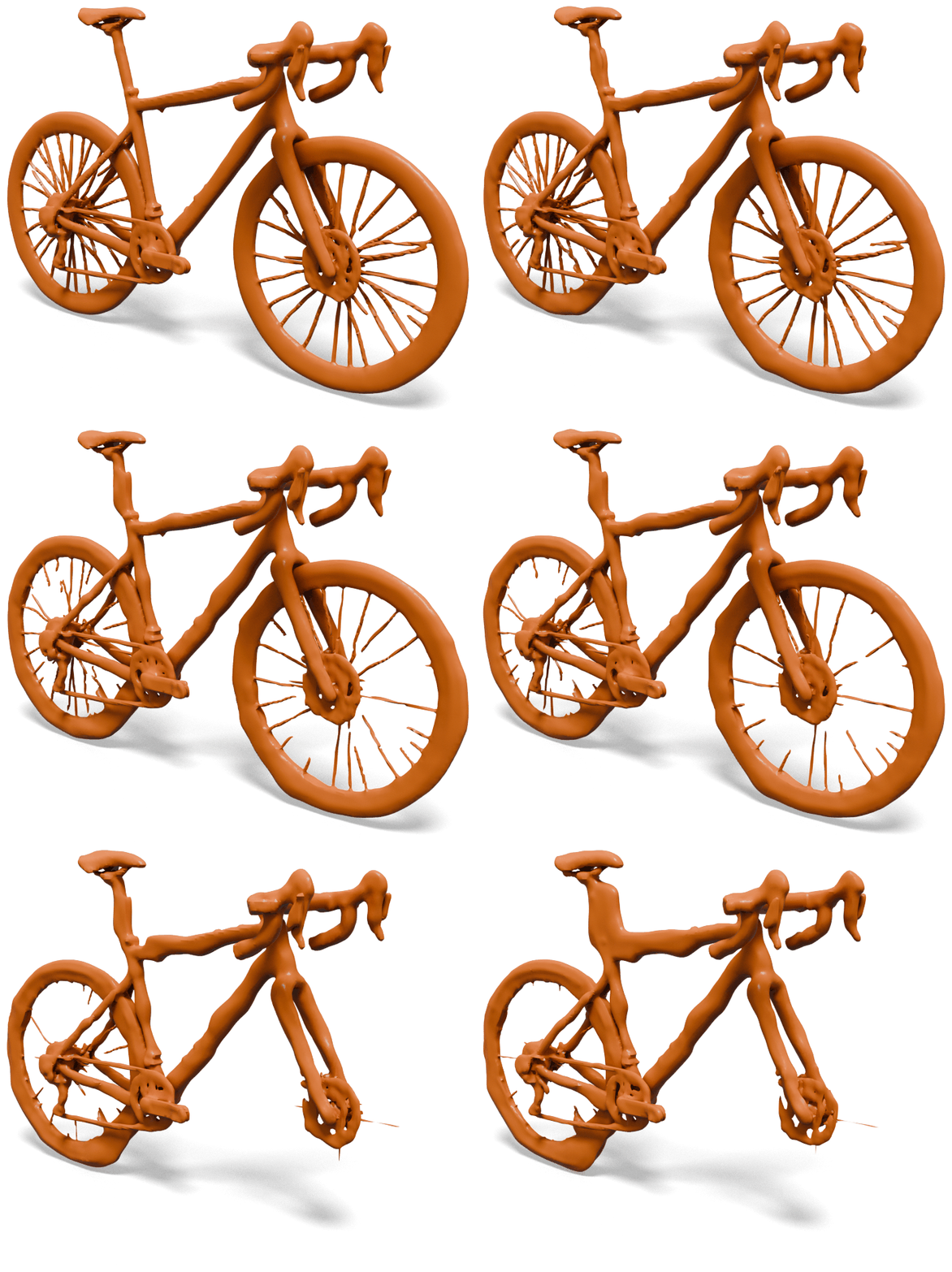
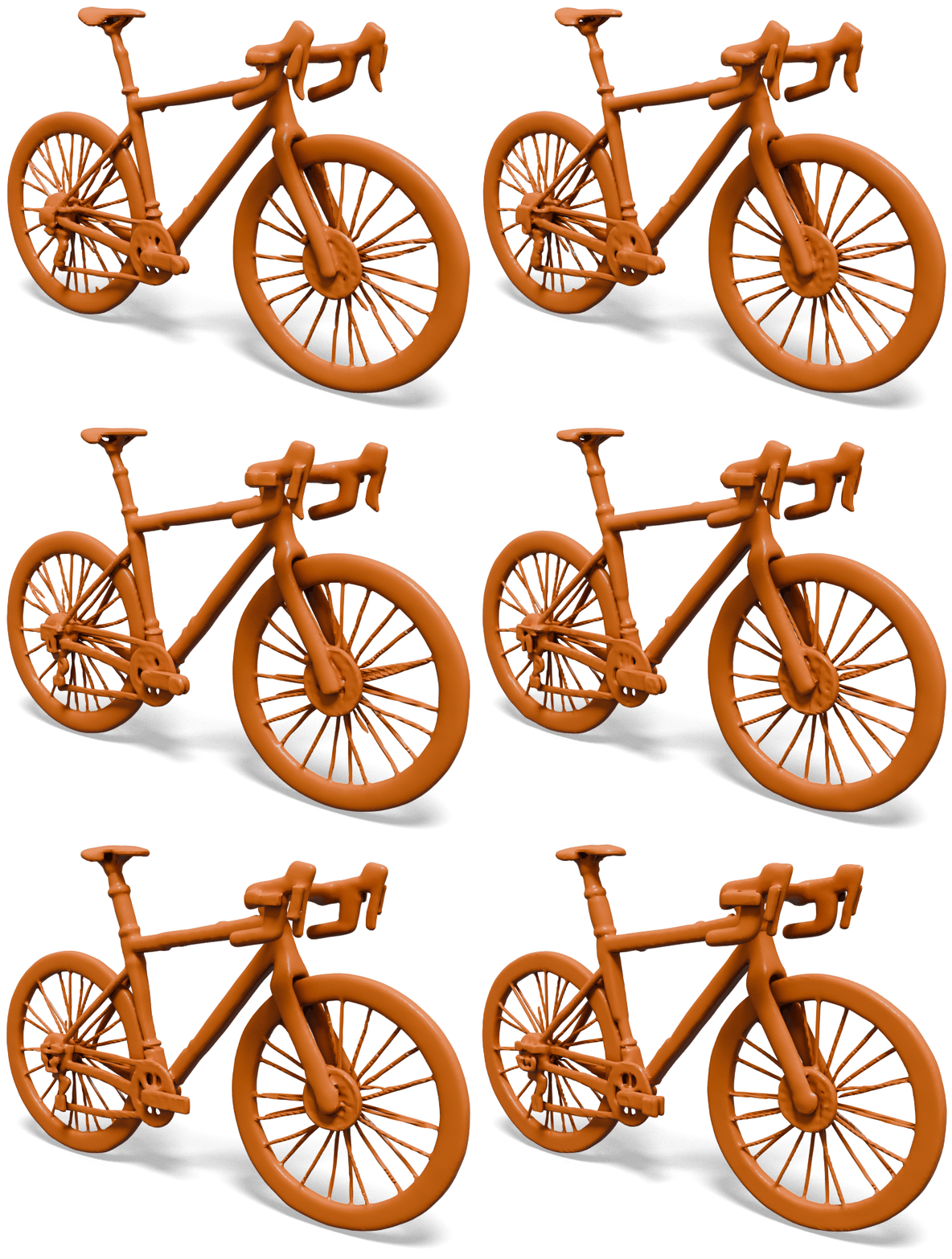
Same starting shapes and same objective value reached: plain gradient descent breaks the shapes, FCSO keeps them valid.
Why it matters
Modern 3D generative models such as VecSet or Hunyuan3D are extremely expressive, but valid shapes only occupy a thin manifold of their high-dimensional latent space. When we optimize a shape for an engineering objective, plain gradient descent quickly leaves this manifold and the shape stops being valid: we call this manifold drift. Existing fixes either rely on a delicate guidance trade-off or are too costly for large models.
How FCSO works
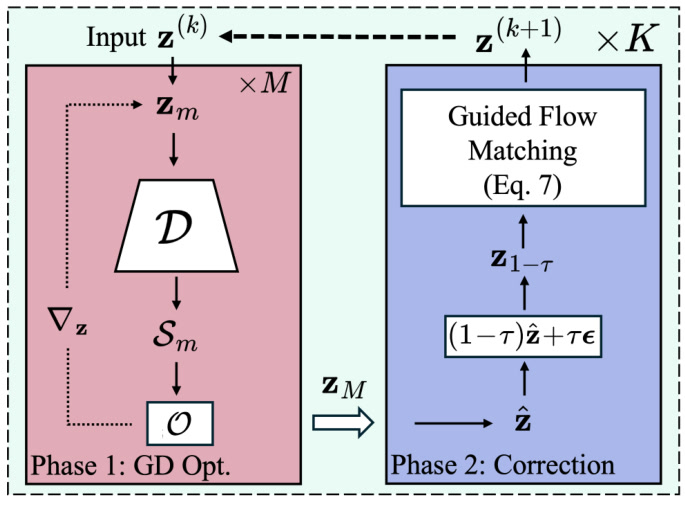
Optimize freely, correct strictly. FCSO alternates two phases: a few free gradient steps on the objective, then a correction where the latent is partially re-noised and a pre-trained flow-matching model carries it back onto the manifold of valid shapes. Repeating this cycle keeps improving the objective without accumulating geometric errors, and works with pre-trained models, without any retraining.
Results
We evaluate FCSO on three tasks of increasing complexity: reducing the volume of chairs, reducing the aerodynamic drag of cars, and maximizing the stiffness of objects under load with the Hunyuan3D foundation model. At the same objective value, FCSO produces the most realistic shapes compared to state-of-the-art baselines, and the gap grows with the size of the model.
| Task (shape prior) | GD | FMG | D-Flow | ICTM | SGO | FCSO |
|---|---|---|---|---|---|---|
| Chair volume −70% (3DShape2VecSet) | 88.1 | 43.1 | 56.9 | 91.7 | 32.7 | 31.8 |
| Car drag −30% (3DShape2VecSet) | 132.8 | 100.2 | 108.8 | 101.7 | 107.7 | 89.1 |
| Bicycle compliance −80% (Hunyuan3D) | 43.1 | 28.8 | OOM | 26.8 | 28.8 | 21.3 |
| Chair compliance −65% (Hunyuan3D) | 68.2 | 55.7 | OOM | 55.9 | 55.1 | 41.3 |
Shape realism (FID on Inception features, lower is better), measured once every method has reached the same objective reduction. OOM: out of memory.
See the full paper for more results.
Citation
@inproceedings{seiler2026fcso,
  title     = {Flow-Corrected Shape Optimization: Taming Manifold Drift in High-Dimensional 3D Models},
  author    = {Seiler, Emilien and Talabot, Nicolas and You, Yingxuan and Stella, Federico and Fua, Pascal},
  booktitle = {Advances in Neural Information Processing Systems (NeurIPS)},
  year      = {2026}
}